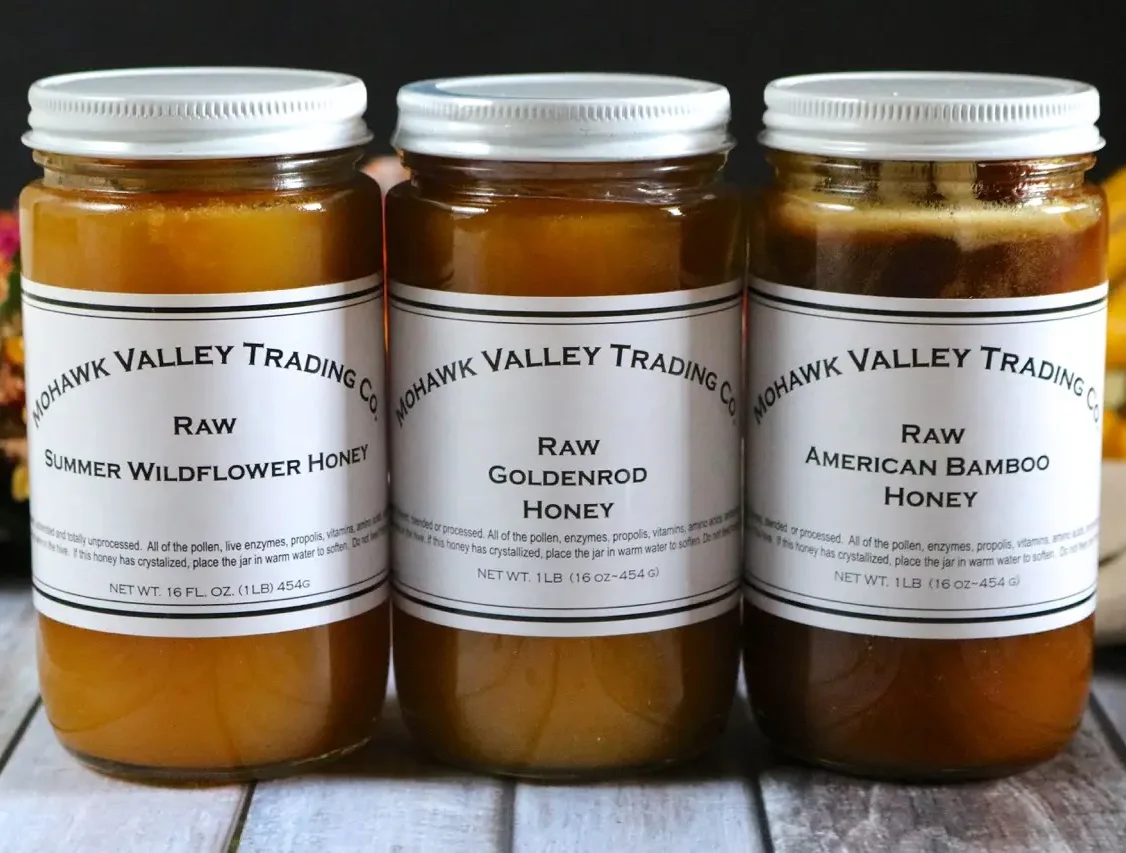
Raw Honey
- Buy raw honey as it exists in the beehive in glass jars.
- Products of the USA.
- 10% off when you buy 2-5 jars of honey. Mix and match any variety or size.
- 15% off when you buy 6 or more jars of honey. Mix and match any variety or size.
- Free shipping to the contiguous 48 states. Does not include Alaska or Hawaii.
$22.00 – $40.00Price range: $22.00 through $40.00
| Quantity | Discount Type | Discount | Price Per Item |
|---|---|---|---|
| 2-5 | Percentage | 10 | $19.80 |
| 6-24 | Percentage | 15 | $18.70 |
| Quantity | Discount Type | Discount | Price Per Item |
|---|---|---|---|
| 2-5 | Percentage | 10 | $36.00 |
| 6-24 | Percentage | 15 | $34.00 |
| Quantity | Discount Type | Discount | Price Per Item |
|---|---|---|---|
| 2-5 | Percentage | 10 | $19.80 |
| 6-24 | Percentage | 15 | $18.70 |
| Quantity | Discount Type | Discount | Price Per Item |
|---|---|---|---|
| 2-5 | Percentage | 10 | $36.00 |
| 6-24 | Percentage | 15 | $34.00 |
| Quantity | Discount Type | Discount | Price Per Item |
|---|---|---|---|
| 2-5 | Percentage | 10 | $19.80 |
| 6-24 | Percentage | 15 | $18.70 |
| Quantity | Discount Type | Discount | Price Per Item |
|---|---|---|---|
| 2-5 | Percentage | 10 | $36.00 |
| 6-24 | Percentage | 15 | $34.00 |
| Quantity | Discount Type | Discount | Price Per Item |
|---|---|---|---|
| 2-5 | Percentage | 10 | $19.80 |
| 6-24 | Percentage | 15 | $18.70 |
| Quantity | Discount Type | Discount | Price Per Item |
|---|---|---|---|
| 2-5 | Percentage | 10 | $19.80 |
| 6-24 | Percentage | 15 | $18.70 |
| Quantity | Discount Type | Discount | Price Per Item |
|---|---|---|---|
| 2-5 | Percentage | 10 | $19.80 |
| 6-24 | Percentage | 15 | $18.70 |
Description
Raw Honey: Frequently Asked Questions
What is raw honey?
Raw honey is honey is as it is found in the beehive: extracted from the honeycomb, strained, and packed in glass jars. This process preserves natural enzymes, yeast, vitamins, minerals, amino acids, antioxidants, bee pollen, aromatics, and propolis, all of which are destroyed by heat.
What is the difference between raw honey and honey?
Regular honey is heated and filtered, which destroys natural enzymes, yeast, vitamins, amino acids, antioxidants, bee pollen, aromatics, and propolis, changing its flavor and texture.
Raw honey is extracted from the honeycomb, strained, and jarred.
Raw honey has a thicker texture, an opaque appearance, and a more pronounced flavor than regular, processed honey.
Is raw honey good for you?
Yes, raw honey is good for you because it contains the natural enzymes, yeast, vitamins, amino acids, antioxidants, minerals, bee pollen, aromatics, and propolis that it has in the beehive.
What are the benefits of raw honey?
The health benefits of raw honey come from its antibacterial, antioxidant, and anti-inflammatory agents. These benefits include, but are not limited to:
- High in Antioxidants: Raw honey contains beneficial botanical compounds, such as flavonoids and phenolic acids, that act as antioxidants to protect the body from free-radical-induced cell damage.
- Antifungal and Antibacterial Properties: Raw honey can suppress bacterial adhesion and anchorage, slowing the infection, making it an antimicrobial that kills bacteria
- Helps Healing Wound: Applied to body surfaces, raw honey can sterilize wounds, decrease inflammation, help tissue repair, and lessen scarring from burns and lesions.
- Suppresses Coughs: Raw honey is widely recognized as a natural, effective cough suppressant and provides relief for sore throats.
- Promotes Digestive Health: Raw honey helps ease many gastrointestinal distress symptoms, including diarrhea, and is known to promote the growth of gut microbiota.
- Natural Sweetener: The enzymes, yeast, vitamins, amino acids, antioxidants, and minerals found in raw honey provide more nutritional value than refined sugar.
What are the downsides of raw honey?
Some disadvantages of raw honey include the potential to raise blood glucose levels, the possibility of causing allergic reactions in people sensitive to bee stings or pollen and the risk of infant botulism in babies under one year old, as it may contain Clostridium botulinum spores.
Should raw honey be refrigerated?
No, raw honey doesn’t need to be refrigerated; doing so causes it to solidify more than it already is. Honey can be stored at room temperature, ideally in a cool, dry, and dark place.
However, if you want to refrigerate it, it won’t hurt it.
Does 100% raw honey go bad?
No, 100% raw honey does not go bad if stored properly in a sealed container; it can last indefinitely, although it may crystallize or change color over time.
Honey’s high sugar content, natural acidity, and low moisture prohibit bacteria and other microorganisms from growing. Spoilage will happen only when moisture is present, enabling fermentation.
Where can I buy raw honey?
You can buy raw honey straight from the hive from the Mohawk Valley Trading Company: extracted from honeycomb, unfiltered and packed in glass jars. Although it isn’t labeled or certified organic raw honey, it is as organic as any produced in the USA.
What kind of honey is good for coughing?
Raw buckwheat is considered the best, most effective variety of honey for treating a cough because of its high mineral, antibacterial, and antioxidant properties. However, any raw honey will help soothe a cough or sore throat.
Here are a few words about Mohawk Valley Trading Company raw honey from one of the world’s most renowned chefs Tom Colicchio:
“If you’re looking for really great honey, here’s my first piece of advice to you: You’re unlikely to find it in a plastic squeeze bottle shaped like a bear.
My second piece of advice: Try these raw honeys from Mohawk Valley Trading Company. Raw honey is unfiltered, unheated and totally unprocessed, and contains all of the same pollen, enzymes, vitamins, antioxidants, minerals, aromatics, and amino acids that it had while still in the hive. I’m told that raw honey has all kinds of health benefits, but I love it because I think it tastes exactly as honey should and has a wonderful, spreadable consistency and a slightly crunchy, substantial texture.”
Not only do we use raw honeys from Mohawk Valley Trading Company at Craftbar, ’wichcraft and Colicchio & Sons, but I keep a jar of the stuff on my desk at all times.”
Mohawk Valley Trading Company’s raw honey is as it is found in the beehive: extracted from the honeycomb, strained, and packed in glass jars. This process preserves natural enzymes, yeast, vitamins, minerals, amino acids, antioxidants, bee pollen, aromatics, and propolis, all of which are destroyed by heat.
Our raw honey is predominantly composed of the nectar of a particular type of blossom or flower.
To capture the unique character and flavor of the blossom or flower, we study botanical bloom and flowering patterns when planning hive placement. The results include, but are not limited to, the following varieties of unfiltered, raw honey:
- Summer Wildflower
- Sunflower-Summer Wildflower
- Autumn Wildflower
- Adirondack Wildflower
- Goldenrod
- Buckwheat
- Japanese Knotweed/Bamboo
- Apple Blossom
- Wild Blueberry Blossom
- Orange Blossom
- Tulip Poplar-Black Locust
- Wild Cherry Blossom-Tulip Poplar-Black Locust
- Basswood-Linden
No pesticides or herbicides are used in the areas where we set up our bee yards. Although it isn’t labeled or certified organic, our raw honey is as organic as any honey produced in the USA.
Reviews
Additional information
| Variety | Raw Adirondack Wildflower Honey, Raw Summer Wildflower Honey, Raw Autumn Wildflower Honey, Raw American Bamboo Honey, Raw Buckwheat Honey, Raw Goldenrod Honey |
|---|---|
| Size | 1 lb., 2 lb. 10 oz., 1 lb. Case of 12, 2 lb. 10 oz. Case of 6 |
Only logged in customers who have purchased this product may leave a review.
Reviews
There are no reviews yet.